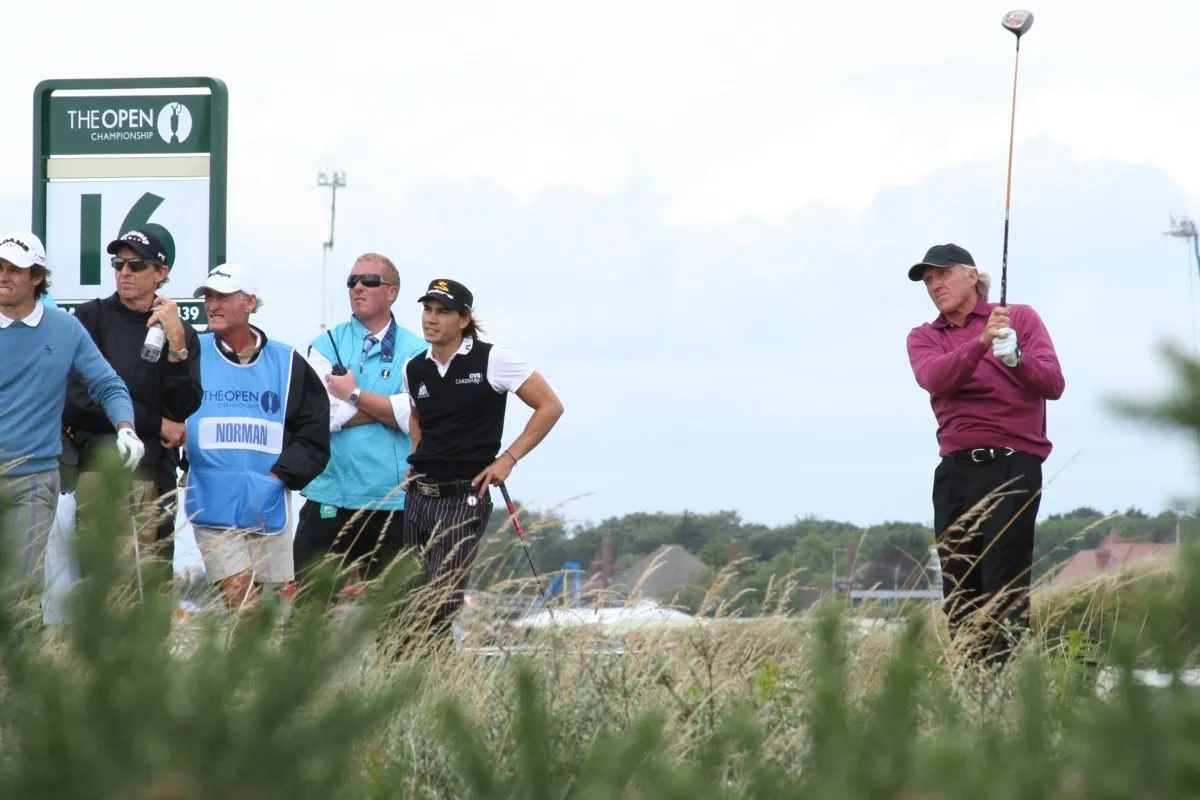
The Open Championship stands as golf's oldest and most prestigious tournament, representing the sport's return to its birthplace and most traditional form. First played in 1860 at Prestwick Golf Club in Scotland, The Open - often called the British Open in America - remains the ultimate test of links golf, where wind, weather and bouncing balls separate champions from contenders.
This comprehensive guide covers everything you need to know about The Open Championship - its rich history, unique characteristics, famous venues and what makes it the most coveted title in professional golf.
History and Origins of The Open Championship
The first Open Championship was held on 17 October 1860 at the 12-hole Prestwick Golf Club. Eight professionals competed for a red leather belt worth £25, with Willie Park Sr of Musselburgh claiming victory. The tournament was established to determine "the Champion Golfer of the Year" - a title still awarded to the winner today.
Prestwick soon declared that the championship "shall be open to the world", which is where the name comes from. Young Tom Morris dominated the early years, winning four consecutive titles from 1868-1872 (there was no championship in 1871) before his early death. His legacy helped establish The Open as golf's premier championship.
The modern era began in 1873, when Tom Kidd became the first champion to receive the Claret Jug, the iconic trophy that remains one of sport's most recognisable symbols. The championship grew in stature through the decades, attracting the world's best golfers and cementing its position as the ultimate prize in professional golf.
The Claret Jug - Golf's Most Iconic Trophy
The Claret Jug, properly known as the Golf Champion Trophy, has been awarded to Open champions since 1873. Made of sterling silver and standing 20¾ inches tall with its base, the jug carries the engraved names of the champions, starting with Young Tom Morris for 1872 - a permanent record of golf's greatest achievements.
The original has stayed with The Royal and Ancient Golf Club of St Andrews since 1927. The champion holds a full-size replica for 12 months before defending, and can order smaller replicas to keep. The tradition of the champion raising the Claret Jug at the 18th green has become one of golf's most iconic moments, representing the culmination of a lifelong dream for every professional golfer.
The trophy's simple elegance reflects the understated nature of The Open itself - no flashy ceremonies or elaborate presentations, just pure golfing heritage and the weight of more than 160 years of history.
Links Golf - The Ultimate Test
The Open Championship is played exclusively on links courses - traditional seaside layouts that represent golf in its purest form. Links golf demands a different skill set from the manicured parkland courses that dominate professional golf:
Course Characteristics
- Firm, fast surfaces - the ball runs considerably further than on soft courses, requiring precise calculation and course management
- Natural hazards - pot bunkers, gorse bushes and undulating fairways create unpredictable lies
- Minimal rough - instead of thick grass, links courses feature wispy fescue that allows for recovery shots
- Elevated tees and greens - built on natural dune formations, creating blind shots and demanding approaches
Weather as the Ultimate Factor
Links courses sit beside the sea, exposing them to constantly changing weather conditions. Wind speeds can vary dramatically throughout a round, making club selection a moving target. Rain squalls can soak players in minutes, whilst sunshine can firm up greens within hours.
The greatest Open champions have mastered the art of playing "bump and run" shots, using the firm turf to bounce balls onto greens rather than flying them all the way. This ground game separates links golf from any other form of professional golf.
The Championship Venues
The Open rotates among ten links courses, each with its own character and challenges. Nine are covered below. The tenth, Turnberry, has hosted four times (1977, 1986, 1994 and 2009) but has no Open scheduled; the R&A has cited logistical challenges in staging a modern championship there.
St Andrews Old Course
The home of golf has hosted The Open 30 times, more than any other venue, and in recent decades has come round roughly every five years. It last hosted in 2022 and stages The 155th Open in 2027. The Old Course's wide fairways appear deceptively easy, but its massive greens, deep bunkers and unpredictable bounces create endless strategic options.
Notable features include the famous Swilcan Bridge, the Road Hole 17th (one of the hardest par 4s in golf) and the massive double greens that serve multiple holes. No golfer's career is complete without conquering St Andrews.
Royal Birkdale
Located in Southport, England, Royal Birkdale has produced some of The Open's most dramatic finishes. The course plays through towering sand dunes, creating natural amphitheatres that amplify the atmosphere.
Royal Birkdale has witnessed historic victories by Arnold Palmer (1961), Johnny Miller (1976), Padraig Harrington (2008) and Jordan Spieth (2017). In 2026 Ryan Fox birdied the 72nd hole to win by one from Cameron Young, becoming only the third New Zealander to win a men's major. Our 2026 majors review covers his week alongside the other three.
Carnoustie Golf Links
Known as "Car-nasty" for its brutal difficulty, Carnoustie in Scotland is the toughest test on The Open rota. The course features narrow fairways, thick rough and the treacherous Barry Burn that snakes through multiple holes.
Jean van de Velde's infamous collapse on the 72nd hole in 1999 - when he needed only a double bogey to win but took triple bogey and then lost a playoff to Paul Lawrie - remains one of sport's most dramatic moments.
Royal St George's
One of four English courses on the rota, Royal St George's in Kent features blind shots, undulating fairways and deep pot bunkers that can end careers. The course demands precise course management and punishes even slight mistakes.
Darren Clarke's emotional victory in 2011 at the age of 42, five years after his wife Heather died of breast cancer, showcased the course's ability to produce compelling human stories alongside great golf.
Royal Troon
This Scottish links has hosted The Open ten times, most recently in 2024 when Xander Schauffele won. Its Old Course provides the championship test.
Henrik Stenson's record-breaking performance in 2016 - when he shot a final-round 63 to beat Phil Mickelson - produced one of The Open's greatest head-to-head battles.
Muirfield
Located in East Lothian, Scotland, Muirfield is considered by many professionals as the fairest test in golf. The course features two loops of nine holes, with the wind direction affecting each loop differently.
Muirfield's strategic design rewards precision and course management over pure distance, making it a favourite among purists. The course has produced champions across every era of professional golf.
Royal Liverpool (Hoylake)
Set on the Wirral Peninsula, Royal Liverpool has hosted The Open since 1897. The course features internal out-of-bounds areas and firm, fast conditions that create difficult approach shots.
Tiger Woods's masterful strategic performance in 2006 - where he used his driver only once all week yet dominated the field - demonstrated how course management can overcome raw distance.
Royal Lytham & St Annes
This English course features a railway line running along one side and numerous deep bunkers protecting small greens. The course requires exceptional precision with approach shots and sophisticated short-game skills.
Seve Ballesteros's birdie from an overflow car park at the 16th hole in the final round of 1979 remains one of The Open's most famous moments, showcasing the Spanish genius at his most inventive.
Royal Portrush
The only Open venue outside England and Scotland, Royal Portrush in Northern Ireland returned to the rota in 2019 after 68 years. The course features spectacular clifftop holes and challenging wind conditions.
Shane Lowry's dominant victory in 2019, cheered on by passionate Irish crowds, showed how The Open can create special moments when the right player wins at the right venue. Portrush hosted again in 2025, when Scottie Scheffler won.
Open Championship Format and Qualification
The Open Championship follows a traditional four-round stroke play format, but its qualification process is uniquely democratic compared to other majors.
Qualification Routes
- The Open Qualifying Series - designated events on professional tours around the world; for 2027 that means 19 events in 15 countries, from the PGA Tour and DP World Tour to the Asian, Japan and Sunshine tours
- Exemption categories - past champions, major winners, top world rankings and leading players from various tours earn automatic entry
- Final Qualifying - four 36-hole events, with the leading scorers at each earning the final spots (for 2027: Burnham & Berrow, Gailes Links, Prince's and West Lancashire)
- Regional Qualifying: held at venues across Great Britain and Ireland and open to professionals and amateurs worldwide who meet the entry criteria, with progression to Final Qualifying
This qualification system maintains The Open's connection to golf's grassroots whilst ensuring the world's best players compete for the Claret Jug.
Championship Format
The Open uses a standard 72-hole stroke play format with a 36-hole cut. However, several factors make it unique among majors:
- Morning and afternoon waves - the field is split into early and late starters, so the weather can treat the two halves of the draw very differently
- Weather delays - high winds frequently halt play, with the championship extending to Monday if necessary
- Local knowledge - caddies familiar with links conditions become invaluable assets
- Equipment adjustments - players modify their setups specifically for firm, fast conditions and unpredictable weather
Notable Open Championship Records and Moments
The Open's long history has produced countless memorable moments and record performances:
Scoring Records
- Lowest 72-hole total: 264 (-20) by Henrik Stenson at Royal Troon in 2016
- Lowest single round: 62, first by Branden Grace at Royal Birkdale in 2017, then matched by Lucas Herbert, Sam Burns and Ryan Fox at Royal Birkdale in 2026
- Largest victory margin: 13 strokes by Old Tom Morris in 1862; Tiger Woods's eight-stroke win at St Andrews in 2000 is the modern benchmark
- Lowest score to par: 20 under, by Henrik Stenson (2016) and Cameron Smith at St Andrews in 2022
Historic Achievements
- Most Open victories: Harry Vardon (6), followed by J.H. Taylor, James Braid, Peter Thomson and Tom Watson (5 each)
- Oldest champion: Tom Morris Sr (46 years, 102 days in 1867)
- Youngest champion: Young Tom Morris (17 years, 156 days in 1868)
- Amateur champions: Only 3 amateurs have won since 1860 (John Ball, Harold Hilton and Bobby Jones), the last being Jones in 1930
Legendary Moments
- Seve's car park shot (1979) - Ballesteros's creative recovery at Royal Lytham defined imaginative golf
- Watson vs Nicklaus (1977) - Their head-to-head battle at Turnberry is considered golf's greatest duel
- Tiger's St Andrews dominance (2000, 2005) - Woods's strategic mastery of the Old Course, including 2000, when he did not find a single bunker all week
- Jean van de Velde's collapse (1999) - One of sport's most dramatic final-hole disasters
Modern Champions and Storylines
Recent Open Championships have produced compelling storylines that showcase the event's unique ability to crown unexpected champions:
International Champions
The Open's global appeal has attracted winners from every continent:
- Rory McIlroy - The Northern Irishman's wire-to-wire victory at Royal Liverpool in 2014 was his third major in four years, after the 2011 US Open and 2012 PGA Championship
- Francesco Molinari - Italy's first major champion won at Carnoustie in 2018 with flawless final-round golf
- Shane Lowry - Ireland's emotional champion at Royal Portrush in 2019, carried by passionate home support
Veteran Victories
The Open has a unique tradition of rewarding experienced players:
- Phil Mickelson (2013) - Won his first Open at Muirfield, only the second left-hander after Bob Charles to lift the Claret Jug
- Darren Clarke (2011) - Northern Ireland's emotional champion at Royal St George's, aged 42
- Ryan Fox (2026): the 39-year-old New Zealander won his first major at Royal Birkdale with four birdies in his last six holes
Recent Champions
- 2021: Collin Morikawa, Royal St George's
- 2022: Cameron Smith, St Andrews
- 2023: Brian Harman, Royal Liverpool
- 2024: Xander Schauffele, Royal Troon
- 2025: Scottie Scheffler, Royal Portrush
- 2026: Ryan Fox, Royal Birkdale
The Open returns to St Andrews in 2027 and to Royal Lytham & St Annes in 2028, the latter moved to August to avoid a clash with the Los Angeles Olympics.
The Open and World Golf Rankings
The Open Championship awards significant Official World Golf Ranking points, making it crucial for players seeking to climb the rankings. A win or a high finish provides a significant ranking boost.
The championship also serves as a major qualifying event for other tournaments, with top finishers earning exemptions into PGA Tour events and other major championships.
Following The Open Championship Live
The Open Championship provides golf's most atmospheric viewing, with dramatic weather, passionate crowds and links golf creating unique television. GolfMode is not out yet. If you want to hear when it is, the waitlist is open.
The championship's position as the final major of the year adds extra significance to every shot, making live tracking especially compelling.
The Open's Cultural Impact
Beyond its sporting significance, The Open Championship represents golf's cultural heritage:
- Scottish traditions - bagpipe players, local customs and historic clubhouses maintain the sport's roots
- The R&A: the championship is run by The R&A, based in St Andrews, which chooses the venues and sets the qualifying pathways
- Media coverage - The Open receives global television coverage, introducing millions to links golf and Scottish culture
- Economic impact - The championship generates significant tourism and economic benefits for host communities
Frequently Asked Questions
Why is The Open Championship called the British Open?
The tournament is officially called The Open Championship, as it was the first "open" championship in golf. Americans often call it the British Open to distinguish it from the U.S. Open, but this term is not used in the UK or by the governing body.
How many courses host The Open Championship?
Ten links courses make up the rota: St Andrews Old Course, Royal Birkdale, Carnoustie, Royal St George's, Royal Troon, Muirfield, Royal Liverpool, Royal Lytham & St Annes, Royal Portrush and Turnberry. Turnberry has not hosted since 2009.
What makes links golf different from regular golf?
Links courses feature firm, fast turf, natural hazards, minimal rough and constant wind. Players must master bump-and-run shots and adapt to changing conditions, making it golf's most traditional form.
Can amateur golfers qualify for The Open Championship?
Yes. Regional and Final Qualifying are open to professionals and amateurs worldwide who meet The R&A's entry criteria. Get through both and you are in the field.
Why is The Open Championship considered the most prestigious major?
As golf's oldest major championship, played on the sport's birthplace courses in its most traditional form, The Open represents golf's ultimate test. The Claret Jug is considered the most coveted prize in professional golf.
What is the prize money at The Open Championship?
The 2026 purse was more than $17 million. Ryan Fox took $3.2 million for winning at Royal Birkdale, plus a year with the Claret Jug.
GolfMode is in the works. Join the waitlist to hear when it launches.
Published by GolfMode Editorial. Every article is researched and fact-checked against official tour and championship sources, and updated when the facts change. Learn about our editorial approach.
GolfMode App · Coming soon
Live scores, coming soon.
We are building real-time scores, player alerts and hole-by-hole tracking across the tours. Join the waitlist to hear when it launches.
Join the Waitlist