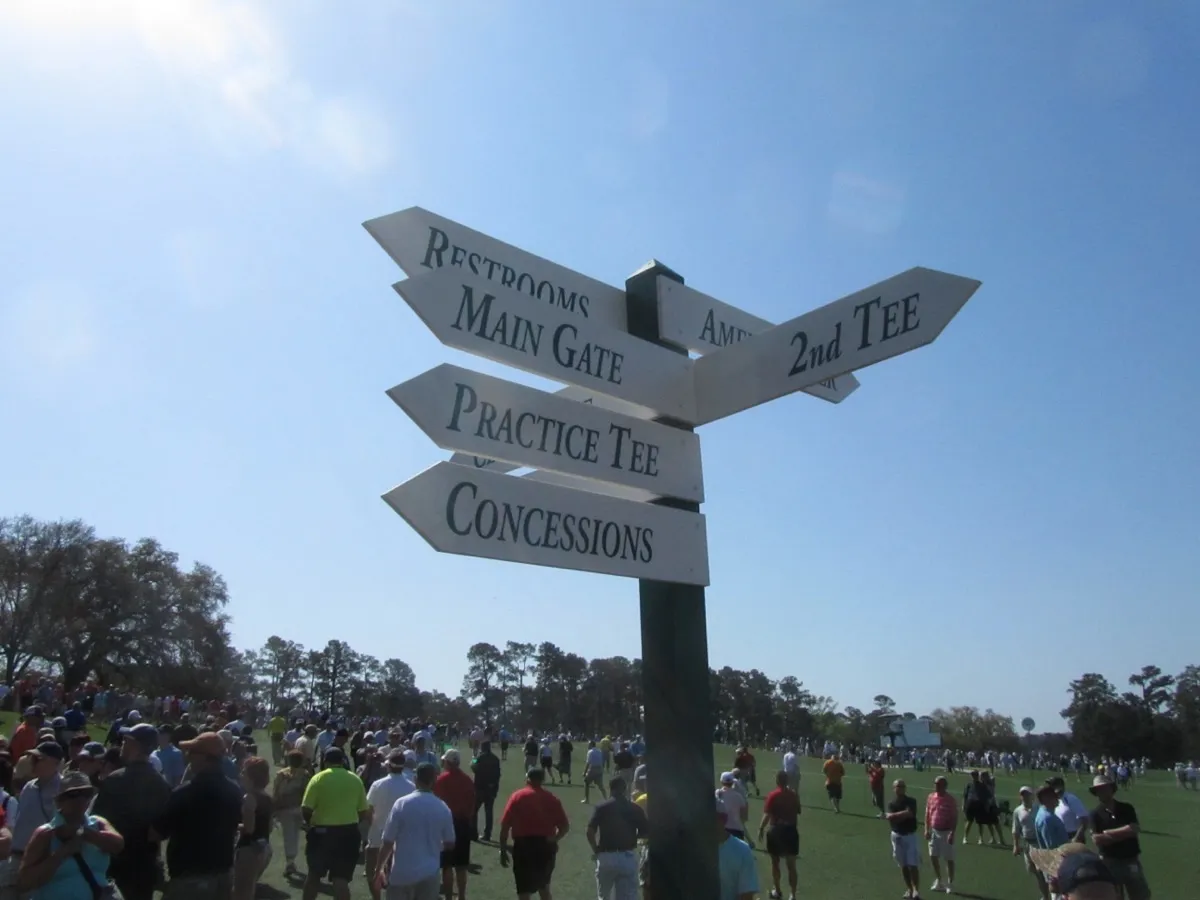
The four major championships represent the pinnacle of professional golf, transcending ordinary tournaments to become sporting events that define careers and create legends. Winning a single major championship places a player among golf's elite; capturing all four - the career Grand Slam - elevates them to the sport's most exclusive fraternity.
This comprehensive guide covers everything you need to know about golf's four majors: their history, unique characteristics, venues and what makes each one special.
The Four Majors - An Overview
Golf's major championships have evolved over more than a century, but the current quartet has remained stable since 1960:
- The Masters Tournament (April)
- PGA Championship (May)
- U.S. Open (June)
- The Open Championship (July)
Together, these tournaments form the backbone of the professional golf calendar, offering the largest prize purses, most prestigious titles and greatest legacy-defining opportunities in the sport.
The 2026 majors went to Rory McIlroy at the Masters, his second green jacket in a row; Aaron Rai at the PGA Championship at Aronimink; Wyndham Clark at the U.S. Open at Shinnecock Hills; and Ryan Fox at The Open at Royal Birkdale. Our 2026 majors review looks at what the year meant.
The Masters Tournament
History and Tradition
The Masters, founded by Bobby Jones and Clifford Roberts in 1934, stands as the youngest major but perhaps the most revered. Held annually at Augusta National Golf Club in Georgia, the tournament has cultivated an atmosphere of tradition and exclusivity unmatched in professional sport.
Unique Characteristics
- Permanent venue: Unlike other majors, The Masters never moves from Augusta National
- Limited field: Typically around 90 players, the smallest field of any major
- The Green Jacket: Winners receive the iconic green jacket in a ceremony that has become synonymous with golf excellence
- Invitation-only: Players must qualify through specific criteria rather than simply entering
Augusta National Course
Augusta National's immaculate conditioning and strategic design create the perfect stage for drama. Key holes include:
- Amen Corner (holes 11, 12, 13): Where tournaments are won and lost
- The par-3 12th: Arguably the most nerve-wracking short hole in golf
- The back nine: Scene of countless legendary Sunday charges
For detailed Masters coverage, see our Masters 2026 results.
PGA Championship
History and Evolution
Originally a match play event when founded in 1916, the PGA Championship transitioned to stroke play in 1958. The tournament is run by the PGA of America and traditionally attracts the strongest fields of any major due to its qualification criteria.
Distinctive Features
- Strongest field: Qualification criteria often produce the deepest talent pool
- Rotating venues: Moves between challenging courses across the United States
- Late season timing: Previously held in August, now positioned as the year's second major
- Club professional inclusion: Several spots reserved for club professionals, honouring the PGA's roots
Course Setup Philosophy
PGA Championship courses typically feature:
- Demanding length: Usually plays as one of the year's longest major venues
- Premium on accuracy: Narrow fairways and penal rough reward precision
- Strong finishing holes: Back nines designed to create leaderboard movement
U.S. Open
History and USGA Philosophy
Conducted by the United States Golf Association since 1895, the U.S. Open embodies the principle that the national championship should identify golf's most complete player through the sternest test.
Signature Characteristics
- Toughest test: Universally regarded as the most difficult major championship
- Course setup: Narrow fairways, deep rough, lightning-fast greens
- Open qualification: Most democratic major with extensive qualifying process
- Par is a good score: Winning scores often closer to even par than other majors
Venue Selection
The USGA rotates the U.S. Open among America's most challenging courses:
- Public courses: Occasionally held at public facilities, emphasising accessibility
- Historic venues: Regular returns to classics like Oakmont, Winged Foot and Pebble Beach
- New challenges: Periodic introduction of modern designs testing contemporary skills
For how the 2026 championship played out, see our U.S. Open 2026 results.
The Open Championship
History and Heritage
The oldest major championship, first played in 1860 at Prestwick Golf Club in Scotland, The Open (often called the British Open in America) represents golf's return to its birthplace and most traditional form.
Links Golf Unique Elements
- Links courses only: Played exclusively on traditional seaside links layouts
- Weather factor: Wind, rain and changing conditions become crucial elements
- Bump-and-run shots: Firm turf and strategic bunkering reward ground-game creativity
- The Claret Jug: One of sport's most recognisable trophies
Rotating Venues
The Open rotates among a select group of links courses in Scotland, England and Northern Ireland:
- St Andrews Old Course: The home of golf has hosted more Opens than any other venue
- Royal Birkdale, Royal St George's, Royal Troon: Historic championship venues
- Carnoustie, Muirfield: Among the world's most demanding tests
- Royal Liverpool, Royal Lytham, Royal Portrush: Further regular hosts
The Career Grand Slam
Winning all four major championships in a career represents golf's ultimate achievement. Only six players have accomplished this feat:
The Grand Slam Club
- Gene Sarazen (1922-1935): The first to achieve the career Grand Slam
- Ben Hogan (1946-1953): Considered by many the greatest ball-striker ever
- Gary Player (1959-1978): The international pioneer who globalized golf
- Jack Nicklaus (1962-1986): The all-time major championship leader with 18 titles
- Tiger Woods (1997-2019): The dominant force in modern golf
- Rory McIlroy (2011-2025): The most recent addition, completing the set at the 2025 Masters
Current Grand Slam Pursuers
Several active players have won multiple majors and remain in pursuit of the career Grand Slam:
- Scottie Scheffler: Needs only the U.S. Open after winning the PGA Championship and The Open in 2025; he came up short at Shinnecock Hills in 2026
- Jordan Spieth: Needs only the PGA Championship for the career Grand Slam
- Others: Several players with 2-3 major wins remain mathematically alive
Major Championship Qualification
Each major employs different qualification criteria, creating varied fields and storylines:
Common Qualification Categories
- Past major champions: Varying exemption periods
- High world ranking: Top players typically exempt
- Tour performance: Recent winners and high finishers
- Qualifying events: Open qualifying processes for each major
Understanding the Official World Golf Ranking system is crucial for following qualification races.
Major Championship Records and Statistics
Career Achievements
- Most major wins: Jack Nicklaus (18)
- Most consecutive majors (modern era): Tiger Woods (4, spanning 2000-2001)
- Youngest major winner: Tom Morris Jr. (17 years, 156 days at the 1868 Open); Tiger Woods remains the youngest Masters champion (21, in 1997)
- Oldest major winner: Phil Mickelson (aged 50 at the 2021 PGA Championship)
Scoring Records
- Lowest 72-hole score: 263 (21-under par) by Xander Schauffele at the 2024 PGA Championship
- Largest victory margin: 15 shots by Tiger Woods at 2000 U.S. Open
- Most consecutive cuts made: Tiger Woods (142 straight PGA Tour cuts, 1998 to 2005)
The Modern Major Championship Experience
Today's majors combine tradition with cutting-edge technology and global reach:
Prize Money Evolution
Major championship purses have grown exponentially, with winners now earning multiple millions alongside the prestige of victory.
Global Television Coverage
Majors reach hundreds of millions of viewers worldwide, making them among sport's most-watched events.
Technology Integration
Shot tracking, advanced statistics and digital coverage enhance the viewing experience whilst maintaining each major's unique character.
Following Major Championships Live
Major championships provide golf's most compelling viewing. GolfMode is being built for following them, and the app is currently open for waitlist sign-ups rather than download.
For context on the primary tour these players compete on throughout the year, see our PGA Tour guide.
Frequently Asked Questions
When are the four major championships played?
The majors follow a traditional schedule: Masters (April), PGA Championship (May), U.S. Open (June) and The Open Championship (July). This condensed major season creates an intense summer of championship golf.
Which major is considered the most prestigious?
While opinions vary, many consider The Masters the most prestigious due to its exclusivity, traditions and permanent venue. However, each major has devoted adherents who consider their favourite the ultimate test.
How many players have won the career Grand Slam?
Only six players in golf history have won all four modern majors: Gene Sarazen, Ben Hogan, Gary Player, Jack Nicklaus, Tiger Woods and Rory McIlroy, who completed the set at the 2025 Masters. This exclusivity underscores the difficulty of the achievement.
Can amateurs compete in major championships?
Yes. Each major reserves spots for amateur players, though the exact number and qualification criteria vary. Amateur participation connects the majors to golf's broader community beyond professional tours.
What is the difference between the calendar Grand Slam and career Grand Slam?
The calendar Grand Slam requires winning all four majors in a single calendar year - a feat never accomplished. The career Grand Slam allows wins to accumulate over any period. Tiger Woods came closest to the calendar Grand Slam, holding all four major titles simultaneously across 2000-2001.
GolfMode is on its way. Join the waitlist to hear when it launches.
Published by GolfMode Editorial. Every article is researched and fact-checked against official tour and championship sources, and updated when the facts change. Learn about our editorial approach.
GolfMode App · Coming soon
Live scores, coming soon.
We are building real-time scores, player alerts and hole-by-hole tracking across the tours. Join the waitlist to hear when it launches.
Join the Waitlist